
Previous post


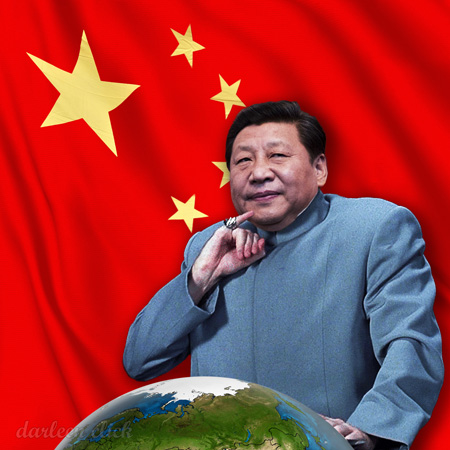
China, through the mouth of dictator Xi (the Pooh) Jinping, is making it clear what it wants. What is equally clear is that President Donald Trump is focused on other matters.
The reports are coming out from China, after the talks between Xi and Trump, that Taiwan was of utmost importance to them. However, the readout from the Trump administration doesn’t even mention Taiwan.
Chinese officials, in a statement released after the lengthy sit-down, said that Xi “stressed to President Trump that the Taiwan question is the most important issue in China-U.S. relations.”
By contrast, a White House official conspicuously didn’t mention Taiwan in a statement to the media, while noting that the leaders discussed keeping the Strait of Hormuz open, as well as China purchasing U.S. agricultural products and ending the flow of fentanyl precursors.
U.S. allies were worried that Trump could end up disavowing U.S. support for Taiwan, perhaps even inadvertently, in his summit with Xi. U.S. policy on Taiwan has long been to acknowledge Taiwan as distinct from the People’s Republic of China, which claims the island as its territory. The island’s semiconductor industry is critical to the Trump administration’s efforts to create a secure supply chain for the U.S. technology sector.
“If it is handled properly, the bilateral relationship will enjoy overall stability. Otherwise, the two countries will have clashes and even conflicts, putting the entire relationship in great jeopardy,” the Chinese statement warned about Taiwan, which is a self-ruling island.
In my mind’s eye, I can see exactly how this conversation went. Xi said something like “Taiwan is truly China, you know,” and Trump said, “That’s not important right now, I want to talk about Iran and the Strait of Hormuz.” China then claims that they brought up Taiwan and “warned” Trump, while Trump brushed them off, because discussing Taiwan was not the point of his visit.
This also brings up the question, yet again, of why China didn’t make a serious move on Taiwan during the Biden administration. Between what we saw of Biden’s foriegn policy – a disastrous withdrawl in Afghanistan, and absolute political weakness that allowed Russia to invade Ukraine and Iran to sponsor Hamas – and what we now know about the Biden White House “Politburo,” combined with his massive flip-flops on Taiwan, it would seem the window of opportunity has closed for China. Not that they had necessarily planned to invade Taiwan proper, but there was no blockade attempt, or massive shows of air superiority, or overt political manipulation. China wanted to be sneaky (they do love their espionage) – and perhaps they were far more crippled by COVID than they wanted to admit – but with Donald Trump back in the White House (and a new government in Japan who would see military action against Taiwan as a threat to their own safety), retaking Taiwan by military or coercive means seems to be off the table. Is this their way of trying to keep it in the conversation – or save face after years of saber rattling that went nowhere?
Naturally, President Trump was not focused on Taiwan. He wants China to leverage Iran to get the Strait of Hormuz opened up fully, without Iranian interference, and to make a deal to give up their enriched uranium and nuclear ambitions. In exchange, China gets Iranian oil deliveries, which they do need. Now, China has been a nominal ally of Iran, but when push came to shove, they sent “moral support,” not materiel support, when the United States and Israel started decimating the political landscape of the Iranian regime. (Plus, there wasn’t much of anyone left to do business with after that…) Now, Trump wants a deal, and he wants China to participate. Secretary of State Marco Rubio gave an interview to NBC News and filled in a few details, but emphasized that we are not asking China for “help” with Iran.
“The Chinese side said they are not in favor of militarizing the Straits of Hormuz, and they’re not in favor of a tolling system, and that’s our position,” America’s top diplomat said in Beijing after Trump, Xi and their delegations held more than two hours of talks.
Trump had been expected to seek the Chinese leader’s assistance in ending the U.S.-Israeli war with Iran and resolving the standoff over the Strait of Hormuz, a crucial shipping route whose effective shutdown by Iran has disrupted global energy supplies and sent gas prices soaring. Trump had credited China with bringing Iran to the negotiating table for a ceasefire last month.
“We are not immune to global oil prices at some point, because we do buy from the global market, but other countries around the world are paying a much higher price,” Rubio said, not referring to China specifically. “They’ve got to get involved in this as well.”
Rubio said Trump and Xi had found common ground on Iran, with China reiterating its opposition to Tehran developing nuclear weapons.
A Chinese readout of the Trump-Xi talks made no direct mention of Iran, saying only that the two leaders “exchanged views on major international and regional issues including the Middle East situation,” according to Xinhua, China’s state-run news agency.
Why, it’s almost as if the readouts emphasize what each side thinks is most important! Shocking! (That was sarcasm.)
However, China is seeing the opportunity to schmooze President Trump, and in return, the president is now setting a date for a state visit by Xi.
President Trump formally invited Chinese leader Xi Jinping and his wife to the White House Thursday night, before touting what he called “the rich and enduring ties between the American and Chinese people.”
“It is my honor to extend an invitation to you and Madame Peng [Liyuan] to visit us at the White House this September 24, and we look forward to it,” Trump said at the conclusion of a 10-minute toast ahead of a state banquet in the Chinese capital’s Great Hall of the People.
“It’s a very special relationship, and I want to thank you again,” added the US president, using the phrase typically reserved for describing America’s ties to the United Kingdom.
While I wouldn’t read too much into that phrase (Trump always speaks in hyperbole), it’s clear that Xi is sucking up.
In his toast, Xi called for increased partnership between China and the US, nodding specifically to Trump’s famous campaign slogan.
“Achieving the great rejuvenation of the Chinese nation and making America great again can go hand in hand,” the Chinese president said. “We can help each other succeed and advance the wellbeing of the whole world.”
“We both believe that the China-US relationship is the most important bilateral relationship in the world,” added Xi, who obliquely referenced what he called the “changing and turbulent” state of global affairs. “We must make it work and never mess it up.”
“Both China and the United States stand to gain from cooperation and lose from confrontation,” the Chinese president concluded. “Our two countries should be partners rather than rivals … Both sides should rise up to this historic responsibility and steer the giant ship of China-US relations forward, steadily and in the right direction.”
Hey, quick question for President Xi – do “partners” spy on each other? Do “partners” have spies working with and sleeping with politicians? Do “partners” steal data? China is not our “partner,” and they haven’t been for a long, long time. They want power, and they are playing the long game to get it, and in the end, they will burn anyone who stands in the way. I do believe that President Trump is too deal-focused to get burned by China (though perhaps a bit singed around the edges), but a future Democrat administration may very well sell out, and sell Taiwan in the process, in order to make some mythical Chinese “partnership” come to pass.
And as far as the state visit in September, perhaps the good people of the United States should heartily greet Dictator President Xi with whole parades of Winnie the Pooh plushies and t-shirts and memorabilia. I’m sure he would just LOVE that.
Featured image: original Victory Girls art by Darleen Click








Leave a Reply