Next post


An incredible find happened this May in London. A retired insurance executive, who has spent the last eleven years volunteering at the British Archives, stumbled across a very and I mean VERY, rare copy of our Declaration of Independence.
Michael Scurr has been volunteering at Britain’s National Archives for the last 11 years, spending his Thursday mornings painstakingly cataloging documents for the benefit of future researchers.
Then one day last May the retired insurance executive made a discovery of his own while sifting through the letters of an 18th century Royal Navy captain.
There, attached to a report on the capture of the American privateer Dalton on Christmas Eve 1776, was an enclosure identified only as “another paper.” Carefully unfolding the document, Scurr stopped when he saw the word “Declaration” printed across the top.
“I thought, oh, right, OK, this is definitely a Declaration of Independence,’’ he told The Associated Press. “How exciting is this?’’
Honestly? I would’ve gone lightheaded, freaked out, and tried to keep calm all at once. Imagine an ordinary day just going through papers from a British Royal Navy Captain and finding out that that “another paper” the Captain had labeled was extraordinary. World changing. The greatest “Dear George” letter of all time.
I’m a gigantic history buff, especially our American history. Even more so once our family found out through research that quite a number of our Dodge ancestors fought in the American Revolution, and one received a commendation for NOT shooting General Washington!
Think about it. To realize you have unearthed the world’s greatest breakup letter of all time, and that it is REAL.
Only about 10 of the copies — known as the Exeter broadsides, for the large sheets on which they were printed — had been thought to have survived over the years. The first copies of the declaration were made by John Dunlap, a printer in Philadelphia, to alert the people of what were then the American colonies that their representatives had decided to sever the colonies from British rule. Other copies, such as those printed in Exeter, followed as word spread of the declaration.
But few of those copies have survived, including just 26 of the original 200 Dunlap broadsides. Even fewer of those from Exeter have been located; one copy sold at auction in January for over $5.6 million.
The history behind how this particular Declaration of Independence landed in the British Archives is also part of the beginning of the American Revolution.
The Declaration itself was officially signed on July 2nd.
On July 2, 1776, delegates for the 13 American colonies voted to approve a resolution submitted by Richard Henry Lee announcing "That these United Colonies are, and of right ought to be, free and independent States, that they are absolved from all allegiance to the British… pic.twitter.com/Pbbm2xnzid
— National Mall NPS (@NationalMallNPS) July 2, 2026
It was fully ratified on the 4th of July, 1776. Several of the signers went to great lengths to get to Philadelphia to sign and vote.
July 2, 1776…
Recognizing the winds of change, Pennsylvania delegates John Dickinson and Robert Morris abstained from the final vote. This changed the Pennsylvania vote from 4-3 against independence to 3-2 in favor.With the Delaware delegation deadlocked at 1-1, it became clear that delegate Caeser Rodney was needed in Philadelphia. Rodney, who was home in Delaware attending to militia duties, rode his horse 80 miles through the stormy night, arriving on July 2 to cast his vote for independence. Delaware votes yes.
South Carolina’s delegates opposed independence. After the July 1 vote revealed that most of the Colonies supported it, Edward Rutledge proposed recasting South Carolina’s vote on July 2. Thomas Jefferson recalled Rutledge informing him that “his colleagues, tho’ they disapproved of the resolution, would then join in it for the sake of unanimity.” The South Carolinians changed their vote to yes.
Think about everything our Founders and those supporting kicking Britain to the curb went through. The Boston Tea Party tells a bit of the story that led up to the colonists with our Founding Fathers in the lead to say ENOUGH.
Now, today, only a few original Declarations survive intact.
How extraordinarily special it is that a copy was discovered in the British Archives just in time for America’s 250th.
Victor Davis Hanson is correct. This Declaration defines our nation, and it absolutely defines FREEDOM.
This particular Declaration of Independence was captured in December 1776. There is only one reason why it is still intact today.
In December 1776, the Dalton was captured near Cape Finisterre in Spain by the H.M.S. Raisonnable, a British navy ship, making it the first American privateer ship to be seized in European waters. The Dalton crew were taken to Plymouth as prisoners, and items from the ship were confiscated by the British captain of the Raisonnable, Thomas Fitzherbert.
Instead of sending the copy to a wartime court overseeing seizures of enemy ships, as was protocol, Fitzherbert sent the declaration directly to the Admiralty, which oversaw Britain’s Royal Navy, describing it as “another document” enclosed with a letter.
And thank goodness he did! Otherwise America and the world wouldn’t have gotten the news that an incredibly special and rare copy of our Declaration of Independence has been found.
What an incredibly special 250th birthday present for this Republic!
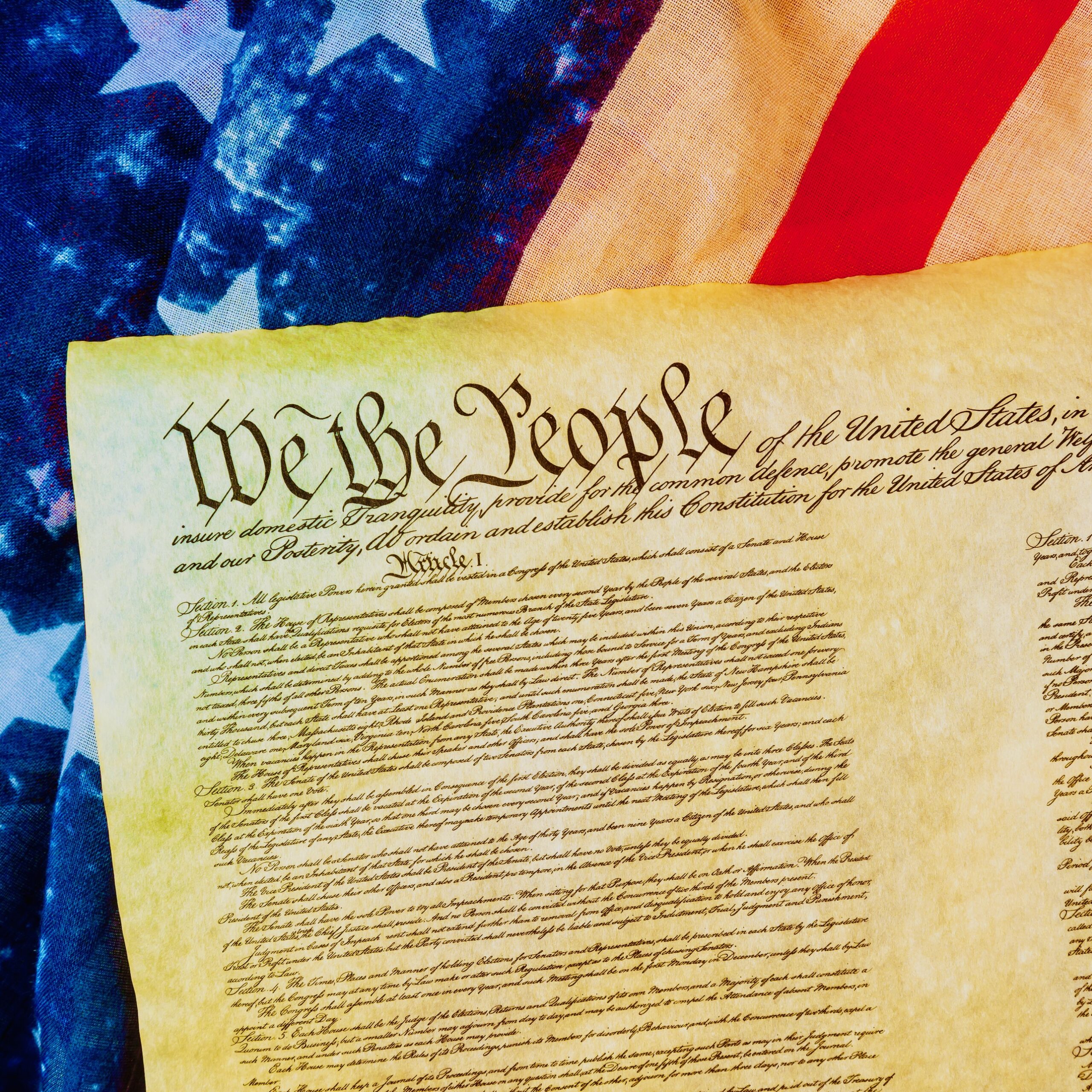
Feature Photo Credit: Declaration of Independence with American flag via iStock, cropped and modified

 Blackwing1 says:
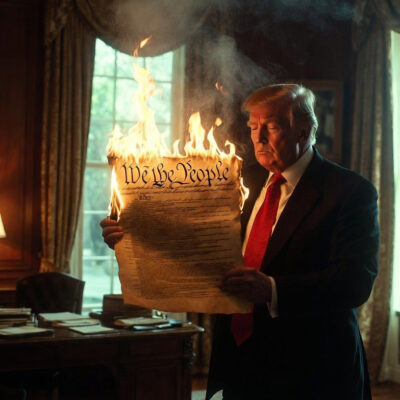
 Great…a post about the Declaration, illustrated by a copy of the US Constitution.
Quite the “gigantic history buff”, Nina.
I’ll apologize if you tell us that you didn’t pick the illustration for the banner.
 Cameron says:
 Good thing it was found before the Islamic subjugation was completed because that paper would have been burned for being haram.

UK Terror Plot Suspects Out On Bail Less Than 24 Hours After Arrest
https://victorygirlsblog.com/uk-terror-plot-suspects-out-on-bail-less-than-24-hours-after-arrest/
The bail system across the U.S. is bad enough, but it seems in certain instances the UK is in a ‘hold my beer’ mode. Yesterday five suspects,...
Continue reading
The post UK…
Democrats Are Distancing Themselves From AOC’s Political Aspirations
https://victorygirlsblog.com/democrats-are-distancing-themselves-from-aocs-political-aspirations/
Yes, AOC has aspirations for higher office. Whether that is taking Chuck Schumer’s seat in the Senate, or swinging for the White House is the question. There’s...
Continue…
Salon’s Amanda Marcotte’s Obsession With MAGA Needs An Intervention
https://victorygirlsblog.com/salon-amanda-marcotte-maga-obsession/
Salon’s Amanda Marcotte has once again wandered deep into MAGA America. And once again, she has returned with tales nobody who actually lives here recognizes. This time,...…
Clancy Juror Has His Lawyer Giving Interview To Defend Him
https://victorygirlsblog.com/clancy-juror-has-his-lawyer-giving-interview-to-defend-him/
The Lindsay Clancy murder trial may be waiting for a hearing tomorrow, but the juror who refused to go along with the insanity defense now has a...
Continue reading
The post Clancy…



2 Comments