
Previous post

Next post



We all know President Trump wants this peace deal with Iran very, very badly. Whether Iran wants peace is an open question. And whether they are willing to abide by the reported terms of this deal are another.
At about 5:30 pm Eastern time on Sunday evening, President Trump announced on Truth Social (and was promptly retweeted by the White House and other accounts) that the peace deal with Iran was “complete.”
https://twitter.com/WhiteHouse/status/2066272391525802417
But what does “complete” mean, and what did Iran actually agree to do? Well, it’s not actually a done deal. That will happen, apparently, on Friday, when documents get signed in Switzerland.
The Strait of Hormuz, which carries 20% of the world’s oil, is set to reopen on Friday when a deal is signed in Switzerland, officials said.
The signing will launch a 60-day negotiating process to determine the fate of Iran’s nuclear program and the extent of sanctions relief, according to officials.
The agreement has not been seen publicly, but the White House on Friday described to reporters five points that are in the deal:
– Iran will destroy its highly enriched uranium
– Tehran will pledge never to obtain a nuclear weapon
– Economic relief will come after those first two steps are completed
– The Strait of Hormuz will be open immediately upon signing
– Iran must stop funding terrorist groups including HezbollahA senior administration official said the economic relief would be released “around physical milestones, it’s built around action and it’s built around verification.”
Before anyone gets confident, I think we all want to see the details in black and white, and Iran’s signature on the paperwork. All this means is that starting Friday, a whole new set of negotiations will begin. I understand the enthusiasm that Trump and the administration are pushing right now.
Vice President JD Vance said Sunday that peace in the Middle East will take time despite a new deal, citing ongoing threats from Hezbollah and warning that the region’s militants “haven’t quite learned how to make peace.”
“There’s, of course, the Hezbollah terrorist organization. Some elements of that organization are still threatening the Israelis,” Vance said on “The Big Weekend Show.”
“You have a number of different pieces that are moving, and as you know, sometimes these cease-fires take a little bit of time to take root,” he said.
“People are very good over there at fighting each other. They haven’t quite learned how to make peace,” he added.
Vance went on to say that under the president’s leadership, “we’ve turned over a new leaf.”
“We’re going to keep on working at it. I’m not going to say that everybody’s going to sing Kumbaya tomorrow. It’s going to take a little bit of time to learn the ways of peace. But I do think we took a major, major step tonight,” Vance added.
However, there is plenty of skepticism and frustration about the deal.
… outrage has erupted across Israel’s political spectrum over details of the proposed cease-fire and Israel’s exclusion from being directly involved in negotiations led by the Trump administration, the New York Times reported.
The frustration was summed up in the main headline of the Israeli newspaper Yediot Aharonot on Sunday, describing the agreement as a “bad deal,” the Times said.
The backlash follows Trump’s anger at Israel-led strikes near Beirut on Sunday, which came in response to Hezbollah firing shots toward Israeli territory.
An Israeli briefed on the deal with Iran told the Times that the cease-fire does not answer questions about the treatment of Iran’s stockpile of enriched uranium and does not have enough curbs on Iran’s nuclear program.
Officials are upset that the deal appears to allow funds to flow back into the coffers of the Iranian government, instead of creating conditions for its collapse, and that there is no clear mechanism to force Iran to cut off support to proxy forces, the source told the outlet.
“No matter what will happen, President Trump will declare victory, a total win,” Jacob Nagel, a former acting national security adviser to Netanyahu, also said during a video briefing described by the paper.
“It’s very easy to say what topics will be up for future negotiations,” Nagel said, adding that Iran’s ballistic missiles and its support for proxy groups in the region do not appear to be addressed in the budding cease-fire deal.
Israel has every right to have legitimate concerns about a peace deal with Iran that was brokered by Pakistan and Qatar. If Hezbollah is not defunded and cut off from Iran, then the snake becomes a hydra, and it doesn’t matter how many heads you cut off. Israel should be able to defend itself when Hezbollah shoots rockets at them without Iran attempting to intervene, and any deal that doesn’t address that reality is problematic at best.
Iran, for its part, is seemingly on board for Friday.
Iran’s Supreme National Security Council confirmed Sunday that Tehran and Washington had finalized a memorandum of understanding (MOU) to end the war after months of negotiations, according to reports.
In a statement, the council said all military operations across multiple fronts, including those in Lebanon, will cease “immediately and permanently” starting Sunday night.
It also said the U.S. naval blockade on Iran will be lifted in full with immediate effect, according to Iran International.
Talks on a comprehensive final agreement will begin only after the other side has implemented its obligations under the framework agreement, the outlet said.
The statement also expressed thanks to Pakistan and Qatar for their mediation efforts.
The deal which is to be signed June 19 will reportedly start 60 days of discussions over Tehran’s nuclear program and broader agreement.
And naturally, the oil markets are responding positively to the news.
Oil prices slipped to their lowest since March on Monday after U.S. President Donald Trump and Iran’s deputy foreign minister said they had reached an initial deal to end the war and to resume traffic through the Strait of Hormuz.
Brent crude futures fell $4.08, or 4.7%, to $83.25 a barrel by 0415 GMT and U.S. West Texas Intermediate was at $80.53, down $4.35, or 5.1%. Both contracts fell to their lowest levels since March 10 on Monday after tumbling more than 3% on Friday.
Is there cause for cautious optimism? Maybe. This is not a peace deal per se, this is a extended ceasefire to discuss all the details. And what will happen if Iran walks away from the table AGAIN during that 60 day negotiating window. Are we just going to be right back where we started? These are questions no one has the answers to at the moment.
The word "obligations" is pretty loaded.
What obligations specifically, within what timeframe?
The fact that no one in the US government will answer that while Pakistan, our supposed ally and mediator, is agreeing with Iran is not good.
— Bonchie (@bonchieredstate) June 15, 2026
Honestly, we aren’t even at the “trust, but verify” stage yet. We are at the “wait and see if anyone shows up to sign the paperwork on Friday” stage, and then we wait and see if that person is made the fall guy for the IRGC – because that could absolutely happen.
A video released by IRGC-affiliated media appears to show a gathering outside the Foreign Ministry’s representative office in Mashhad on Saturday evening where protesters chant, “Death to Araghchi, the dishonorable compromiser and infiltrator.”
The hardliners have been… pic.twitter.com/VlhvUiCFmA— Iran International English (@IranIntl_En) June 13, 2026
Buckle your seatbelts, everyone – this ride is not over yet, and there are a lot of hours between now and Friday.
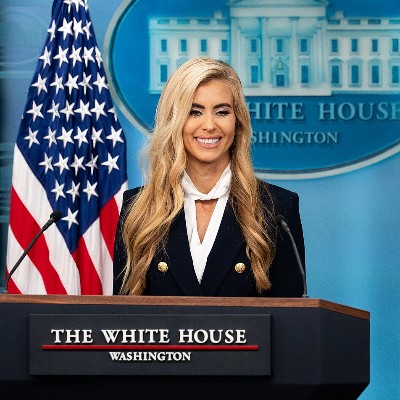
Featured image: official White House photo by Daniel Torok from June 21, 2025, cropped, public domain






FOUL: WNBA Teams Run To Locker Rooms Before National Anthem
https://victorygirlsblog.com/foul-wnba-teams-run-to-locker-rooms-before-national-anthem/
It was like rats deserting a sinking ship. During Games 1 and 2 of the WNBA Finals, the teams scurried into their locker rooms just before the...
Continue reading
The post FOUL: WNBA Teams
Mark Kelly’s White House Dreams Are Floating In Space
https://victorygirlsblog.com/mark-kelly-white-house-dreams-floating-in-space/
It appears The Hill has found another name to toss into the Democrats’ 2028 presidential circus, and this time it’s astronaut-turned-senator Mark Kelly. With the Democratic Party...
Continue read






Leave a Reply