
Previous post

Next post


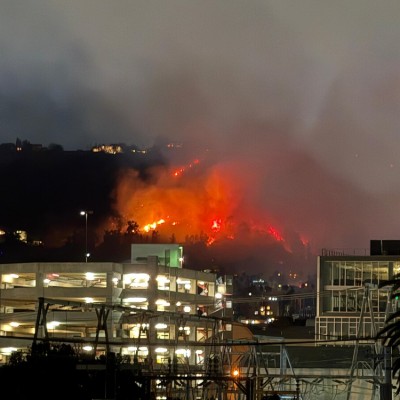
We’re all out of shocked faces. When it comes to wasteful spending and California, no one should expect efficiency or competence.
Gavin Newsom has been governor of the state for almost two full terms, since the beginning of 2019. He was lieutenant governor of the state for two terms before that. He’s been at the center of state politics for nearly 16 years at this point. The state has not gained a reputation for wise fiscal spending, or for looking out for the well-being and safety of the residents of California. And now, a new report from the California Post (the West Coast branch of the New York Post) has the details of how federal wildfire relief funding over the last several years got divided up by the state, with a majority being marked for low-income housing instead of for victims’ relief.
California funneled nearly $369 million in federal aid intended for victims of its deadliest wildfire year to low-income housing developers — without requiring them to house a single wildfire survivor, a California Post investigation found.
The staggering sum was awarded to developers while thousands of Californians struggled to rebuild their lives after the devastating 2018 fires, which killed 103 people and damaged or destroyed more than 24,000 structures.
The fires being referenced here were the Woolsey and Camp Fires. Jerry Brown was still governor at the time, with Newsom as his lieutenant governor. Eventually, over a billion dollars was given to California from the Department of Housing and Urban Development.
The $1,017,399,000 allocation from the US Department of Housing and Urban Development (HUD) was intended to cover recovery costs not paid by insurance or other assistance.
California’s Department of Housing and Community Development (HCD) oversees the money, dividing it between helping homeowners rebuild and financing affordable rental housing in fire-ravaged communities.
Of the $222.4 million earmarked for homeowners, just $38 million had been spent rebuilding 110 homes by the end of 2023, according to state records. The Camp Fire alone destroyed 14,000 homes.
Developers, meanwhile, were awarded $368.7 million for low-income housing projects, without any requirement to house wildfire survivors.
In one funding round last year, the state awarded $146.9 million to 14 developments from Santa Cruz to Covina, with a combined price tag of $632 million, roughly $754,000 per apartment.
HCD could not provide a count of how many, if any, wildfire survivors live in the apartments.
The Post talked to one man, 62 year old Mickey Schechter, who lost his home in the Woolsey Fire. He still has not been able to rebuild.
Nearly eight years later, he is still living in a cramped, 350-square-foot guesthouse that survived the blaze, unable to afford the estimated $2 million it would now cost to rebuild his home.
Schechter was furious when told where a large chunk of the federal cash had gone.
“That’s our money. We’re the ones that suffer for it. Give us our damn money. That’s bulls—t. I’m pissed,” Schechter told the California Post.
Meanwhile, Schechter says he has been left facing a financial nightmare.
He said the county charged roughly $178,000 for debris cleanup, while he has spent another $300,000 maintaining the property.
Insurance paid just $450,000 for his $750,000 home, which he estimates would now cost $2 million to rebuild.
But state rebuilding aid was restricted to low and moderate income homeowners, with insurance payouts reducing eligibility. Schechter says never received the help he needed.
The Woolsey Fire recovery program provides a stark example of how developers secured millions as survivors like Schechter struggled to rebuild.
In July 2024, California offered $26.7 million in Woolsey Fire recovery funds. Only one developer applied.
Rancho Cucamonga nonprofit National CORE proposed an 81-unit apartment complex in Agoura Hills, scoring just 90 points, barely above the 88-point minimum and the lowest among projects funded that round. Others scored as high as 117.
National CORE secured nearly the entire pot, $26.1 million, despite no requirement to house a single Woolsey Fire survivor.
The cities and counties involved say that HCD has been the one deciding where the money goes, not them. HCD didn’t have much of an explanation for their rationale.
HCD defended the spending, arguing that new apartments replace homes lost to the fires.
Displaced renters “generally choose to move to another existing rental housing unit,” spokeswoman Jennifer Hanson said.
But developers aren’t required to house fire survivors, who are instead grouped with Section 8 tenants as “least likely to apply” and targeted only through advertising.
State rules prohibit residency-based preferences, citing fair-housing laws. HCD wouldn’t say whether it considered prioritizing fire survivors.
Anyone who has been paying attention to how California spends funds after disasters like wildfires knows that after the money gets approved, it never seems to end up where it was supposed to be. Gavin Newsom got the state legislature to cough up $2.5 billion after the Los Angeles wildfires. Earlier this year, the local NBC affiliate tried to track down where that money had gone.
NBC4 Investigates found much of the $605 million expended to date was circulated to state agencies that performed tasks related to the Eaton and Palisades fires, $37 million went to the LA City and County fire departments to reimburse the costs of firefighting, and nearly $21 million was paid to the California Highway Patrol for managing road closures and security in the fire zones.
State records also showed about $14 million was used to pay CHP officers sent to demonstrations against aggressive federal immigration enforcement in downtown LA after state officials authorized use of the fire relief money for other purposes.
That means 60%, or roughly $895-million, of an initial $1.5-billion portion designated for fire relief, hasn’t been used despite widespread need throughout the communities devastated by the fires.
The local investigation spurred the state into releasing more money to people.
Nina Madok, a leader with the Community Recovery Coordination Council, said the report gave the wildfire survivors leverage to fight for more money for recovery projects.
“If it wasn’t for your reporting on this pot of money that was sitting at the state level, we never would have been able to advocate for ourselves specifically to get some of that money,” Madok said.
Between the slow-walking of the release of the Los Angeles recovery funds, and the revelation that the 2018 HUD funds that have gone into low-income housing, it seems that California has other priorities than actually helping survivors of wildfires. They have agendas to meet and pockets to line.
The push for low-income housing accomplishes three ideological goals. One, it redistributes property from those who had it to those who do not.
Two, it satisfies a “green” agenda that sees single-family homes as a sign of wasteful sprawl.
And three, it allows politicians to claim they are doing something about the state’s housing crisis.
But none of that is the purpose of the funding, which taxpayers provided to help rebuild communities that had been destroyed through no fault of their own.
It is no longer a conspiracy theory to say that some policymakers would rather see residents of destroyed communities replaced by dense developments than to see them safely restored to their homes.
We hear a lot from California Governor Gavin Newsom about how he is not to blame for the fact that President Donald Trump and the Republican Congress have yet to provide additional funding for rebuilding after the devastating LA wildfires in 2025.
But perhaps Washington has been reluctant for good reason: Americans cannot trust that California will spend the money properly.
And just remember – Gavin Newsom really really REALLY wants to be president of the United States. Is California exactly the shining example of fiscal management that the country should emulate? Maybe we should ask more of the people who have waited for eight years to get their homes rebuilt, only to find that the money went somewhere else.
Featured image: view of wildfire on January 8, 2025 from West Hollywood, Los Angeles via YisroelB501 on Wikimedia Commons, cropped, Creative Commons Attribution-Share Alike 4.0 International (CC BY-SA 4.0)




 Scott says:
Seems that’s a pretty clear case of fraud, if the Fed said the money was for wildfire relief, and the state spent it elsewhere..
Defintely a sad story of the guy that can’t afford to rebuild, but also seems that he was WAY underinsured, so maybe a cautionary tale for personal responsibility. Make sure your home is properly insured for replacement cost. You shouldn’t be waiting on someone else to replace your home. ( say this living in wildfire prone Colorado, where every year, I review my homeowner policy to ensure that I am covered for full replacement cost. It is more expensive, but it means I don’t have to hope for govt. money should the worst happen.
Writing
I wouldn’t be so sure. Insurance companies can act in bad faith even when you’re their client and liability is crystal clear.
My recent experience is anecdotal, but the lesson is broadly applicable.
I was recently involved in a serious accident when an SUV traveling in the opposite direction swerved into me while I was stopped at a traffic light, waiting to turn. My car was totaled, and I was injured. Here’s the twist: all three drivers were involved, and all three were insured by the same company. Should make things simpler, right? Wrong.
Despite highway patrol supporting my account and clear evidence that I was 100% at fault for nothing, my insurer fought me at every turn. They undervalued my car, treated my injuries as if they didn’t exist, and used one delay tactic or pressure play after another. Eventually, I had to involve my state’s insurance commissioner to get things moving.
I won’t get into all the details, but the lesson I learned was: *question the tools and methods insurers use to evaluate your property. The trick is in the software formulas. Do your own research. Don’t accept their numbers, no matter how confidently they insist, “Our assessment stands.” Their assessment can sit down\!
I DO agree that putting faith in government is unwise. But putting faith in insurance companies is no better.
I think I’ll put my faith in God. Life can turn change in a second but your coverage as one of His kids cannot be taken away, no matter what life throws at you.
 Dietrich says:
And yet, California will keep reelecting the same Democrats.
[…] The New York Post reported via Victory Girls Blog. […]



Vivek Ramaswamy’s Ad Brings Out the GOP Pitchforks
https://victorygirlsblog.com/vivek-ramaswamy-ad-brings-out-gop-pitchforks/
Vivek Ramaswamy ran a controversial campaign ad featuring Amy Acton’s estranged mother, and now some of his fellow Republicans are making more noise about it than the...
Continue reading
The
Ilhan Omar Doesn’t Outright Deny That She Married Her Brother
https://victorygirlsblog.com/ilhan-omar-doesnt-outright-deny-that-she-married-her-brother/
Ilhan Omar is in deep, deep trouble. And it looks like she knows it. The raid on her home, and the revelation that the feds have her...
Continue reading
The post Ilhan Omar Doesn’t Outright
Is Trump Finally Getting Results Between Russia And Ukraine?
https://victorygirlsblog.com/is-trump-finally-getting-results-between-russia-and-ukraine/
There is a lot happening on the Russia-Ukraine front right now, and President Trump is celebrating a win. However, with news very much in flux, we should...
Continue reading
The post Is Tru







4 Comments