
Previous post


This last April, the news broke that an Air Force F15-E fighter jet had been shot down over Iran. Initially, only the pilot was recovered. The weapons officer had to evade capture after being downed for nearly two days. He’s now telling his story on the season premiere of “60 Minutes.”
The Air Force officer, whose name is not being released in the this interview – he’s referred to as “Bravo,” his mission call sign, for the story (the pilot is referred to as “Alpha”) has a gripping testimony of survival in incredibly tense circumstances. But USA Today, who watched the season premiere of the news magazine show, is asking everyone to please think of the real victim in this story – Scott Pelley, who was fired after a massive tantrum last June. After all, how can “60 Minutes” possibly survive without the ego in a suit headlining the show???
CBS' '60 Minutes' returns without Scott Pelley – Inside the Season 59 premiere https://t.co/76GoGDKWz0
— USA TODAY Entertainment (@usatodayent) September 14, 2026
As it turns out, the show is just fine without Pelley’s preening snobbery on the screen. Norah O’Donnell (certainly no centrist, as we all know) conducted the interview with “Bravo,” and though she calls the Iran war “costly and unpopular” in the opening minute of the segment, the story is solely focused on this Air Force colonel, the weapons officer on the F15-E, his harrowing story of landing and survival after being shot down, and the rescue mission to bring him back. The extended interview is worth the watch (and runs just over 29 minutes).
We were told at the time of the rescue of “Bravo” that he was “seriously injured,” which made his ability to evade capture by the Iranians even more impressive. This interview reveals the extent of those injuries – and that they were sustained because after ejecting from the fighter jet once it was hit, HIS PARACHUTE FAILED TO DEPLOY. Due to the damage from the hit, the ejection seat was damaged and the parachute did not deploy.
BRAVO: My parachute was damaged in the initial attack. At one point when I looked up and saw no parachute, that was the most terrifying thing I’ve ever seen. So I paused, right then. And I prayed, “Lord, your will be done. But if I’m getting through this, I need help.”
NORAH O’DONNELL: While you’re in the air.
BRAVO: Yeah.
NORAH O’DONNELL: Is that almost like free-falling or how would you describe that?
BRAVO: Free-falling is a good way to put it. I wasn’t focused on the speed at which I was falling. I was instead focused on trying to correct the problems that were in front of me and doing anything I could to unfurl or pull pieces of the parachute loose.
We’ll never know just how fast Bravo was falling, but we do know the military trains to survive hard landings.
NORAH O’DONNELL: So how fast do you think you were going, when you hit the ground?
BRAVO: Based on my description and the injuries that I had, the professionals think I hit the ground, going somewhere between 70 and 100 mph.
NORAH O’DONNELL: How did you survive that?
BRAVO: A modern-day miracle. I believe that it’s a testament to God’s provision in my life to bring me through that moment in a way that didn’t prevent injuries, but prevented any catastrophic injuries that would have affected my ability to survive.
The fall broke Bravo’s back. He also sustained a broken arm, broken shoulder, sprained ankle and was bleeding from cuts and scrapes to his head and face.
Along with giving credit to God for saving his life, “Bravo” also credits the Air Force personnel for their work.
Bravo acknowledged his fellow officers who maintained their aircraft, his equipment and his survival gear, saying everything performed better than expected despite damage by the missile.
“I want the airmen that worked diligently on the seat and on the equipment for our survival gear there to know… they did an incredible job,” Bravo said.
“Despite the damage to the aircraft, to include the damage to my ejection seat, it outperformed the design specifications. And I call that a testament to their professionalism.”
Even Norah O’Donnell was blown away by this story of survival, saying that she had “chills” hearing the tale. But then came the evasion – and the Iranians already had a bounty on his head.
Bravo told us the safest place for him to go was up, so he quickly made the decision, despite his broken bones, to hike and climb up a 7,000-foot ridgeline.
NORAH O’DONNELL: Given your injuries, how did you find the strength to make it up the mountain?
BRAVO: Never let a lack of motivation put you on Iranian TV.
NORAH O’DONNELL: You were thinking that?
BRAVO: Absolutely.
Soon after the crash, an Iranian news anchor announced a bounty for the capture of the Americans.
Videos emerged on the internet of armed groups hunting for the downed crew.
BRAVO: I can tell you, for a fact, that they were looking for me.
According to U.S. military sources, Iranian forces got to within a few hundred meters of Bravo.
“Bravo” managed to evade capture, and get messages out to the American forces looking for him. Alpha had already been rescued, but as Secretary Pete Hegseth tells O’Donnell, that meant they still had a man out there.
SECRETARY PETE HEGSETH: It was a gun fight all the way in and all the way out. But they got Alpha back. And then we began to– immediately, I mean you’re celebrating that Alpha’s back, but you realize there’s– the job’s only half done.
Bravo was still missing. Alpha’s rescue force attempted to also locate him but was unsuccessful and eventually withdrew.
Then, as night fell on that first day in Iran, a message from Bravo …
NORAH O’DONNELL: When were you first able to send a signal?
BRAVO: As soon as I found a spot that I felt provided some concealment, I started working on– toward communication.
NORAH O’DONNELL: What did you say in that message?
BRAVO: When I got to the moment where I could review and think about all that I’d gone through, I sent, “God is good,” as a recognition of all that he had brought me through.
ADM. BRAD COOPER: There was a “I’m hurt, I’m moving,” and there was a “God is good” message that came in there. Now we knew he was alive. He’s moving. OK, let’s keep planning.
With assistance from the CIA, “Bravo’s” location was eventually pinpointed – but it had been nearly two days since he was shot down, miraculously survived a free fall landing, and was still hiding from the Iranians.
Bravo would have to survive with almost no water and no food, in the wind and the cold of the high mountain desert, for another full day. In the end, it was the CIA that played a pivotal role, launching a multipronged campaign, which included deception to confuse Iranian forces and top-secret technology to pinpoint Bravo’s exact location.
To clear the way for his rescue, American bombers and drones hit Iran’s Revolutionary Guard forces nearby, as seen in this newly declassified video. Nearly two days after Dude 44 went down, it was time to go in for Bravo.
NORAH O’DONNELL: And how many special operators did that involve?
ADM. BRAD COOPER: That second operation had about 92 people on the ground. This would be the first U.S. boots on the ground in 46 years–
NORAH O’DONNELL: In Iran?
ADM. BRAD COOPER: In Iran. We had about several hundred in the air, and there were probably 3,000 to 5,000 supporting overall. It was an operation inside an operation.
NORAH O’DONNELL: So in order to get out one, there were close to 100 other service members involved in risking their lives on the ground?
GEN. CAINE: Norah, I think what you need to know is we would have sent more to go get the back-seater.
We rescued him in the middle of a war zone with IRGC forces actively looking for him; it is incredible. Our armed forces' willingness to do whatever it took to get him home is the only thing that averted a complete disaster.
God is good. https://t.co/7SUOfXYEjX
— AG (@AGHamilton29) September 14, 2026
And the moment of rescue?
“The moment a PJ showed up to me on that ridgeline was one of the greatest moments of my life,” says Bravo, the U.S. Air Force officer who was shot down and stranded behind enemy lines in Iran, referring to the pararescue specialists who picked him up. https://t.co/5ZAghyd0wG pic.twitter.com/53PeuvtgkV
— 60 Minutes (@60Minutes) September 14, 2026
However, the rescue wasn’t without its problems.
But Bravo and the others on the ground were not yet out of danger. The rescue planes’ landing gear was stuck in the desert sand of the makeshift airstrip. The planes could not take off, and more than 90 of what Admiral Cooper described as the military’s “most elite service members” were stuck until a clandestine Air Force unit came to the rescue.
The U.S. destroyed the two marooned aircraft, worth about $100 million each, as well as the Little Bird helicopters, so the technology wouldn’t fall into Iranian hands.
Fifty hours after being shot down, Bravo was safe, rescued as the sun rose on Easter Sunday. Not long after leaving Iran, Bravo called his wife back home in the U.S.
“I was really proud of her and grateful for the strength that she showed,” Bravo said.
The officer says he wants the American people to know that the rescue is about more than what he went through.
“It’s a story of the teamwork, the training, of the faith, of the decisions and the leadership to do something that will live in history as an example of what America’s willing to do, in order to uphold our promise and leave no man behind.”
If you wrote this up as a script for a movie, Hollywood would dismiss it as being too contrived and too unbelievable. And yet, it happened. So many things could have gone wrong, and yet, by the Hand of Providence, “Bravo” survived, came home, and is telling his story. God bless him; I’m sure he’s not fully physically recovered yet.
Oh, and I think “60 Minutes” is managing without Scott Pelley.
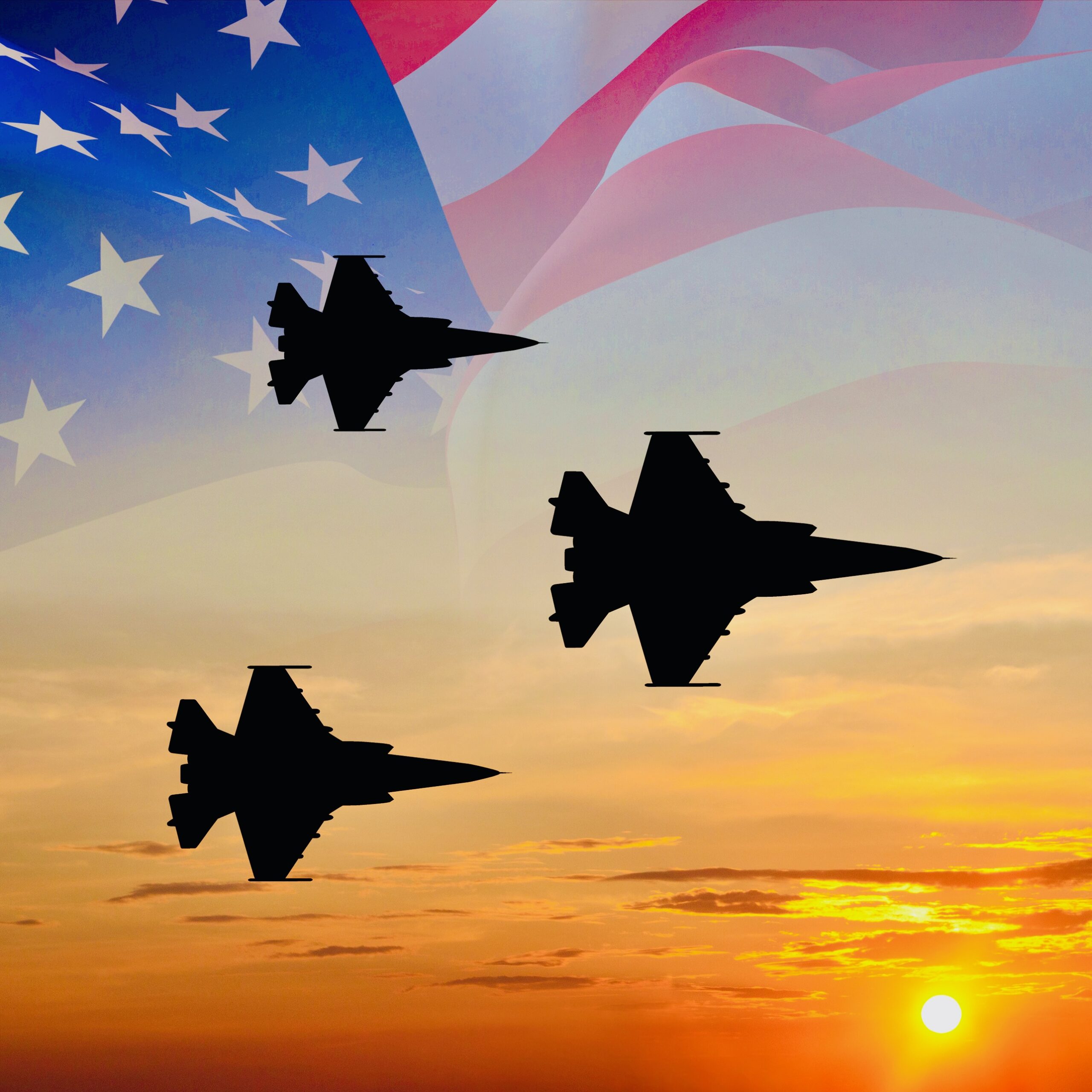
Featured image: fighter jets and American flag via iStock, cropped and modified




FOUL: WNBA Teams Run To Locker Rooms Before National Anthem
https://victorygirlsblog.com/foul-wnba-teams-run-to-locker-rooms-before-national-anthem/
It was like rats deserting a sinking ship. During Games 1 and 2 of the WNBA Finals, the teams scurried into their locker rooms just before the...
Continue reading
The post FOUL: WNBA Teams
Mark Kelly’s White House Dreams Are Floating In Space
https://victorygirlsblog.com/mark-kelly-white-house-dreams-floating-in-space/
It appears The Hill has found another name to toss into the Democrats’ 2028 presidential circus, and this time it’s astronaut-turned-senator Mark Kelly. With the Democratic Party...
Continue read


Leave a Reply