
Previous post


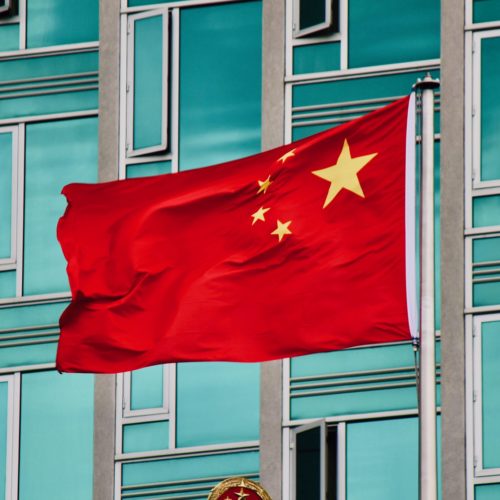
When President Trump wrapped up his visit to China last week, he talked about trade deals that had been agreed upon.
No details were available at that moment, so the media immediately launched into full speculation mode.
Well, now the White House has issued a fact sheet regarding the details. And they are pretty wide ranging, with a lot of downstream benefits.
China approved an initial purchase of 200 American-made Boeing aircraft for Chinese airlines. This tranche of aircraft – China’s first commitment to purchase American-made Boeing aircraft since 2017 – will drive high-paying, high-skilled U.S. manufacturing jobs and enable the Chinese people to fly on American-made planes for decades to come.
China will purchase at least $17 billion per year of U.S. agricultural products in 2026 (prorated), 2027, and 2028, in addition to the soybean purchase commitments that it made in October 2025.
China restored market access for U.S. beef by renewing expired listings of more than 400 U.S. beef facilities and adding new listings. China will work with U.S. regulators to lift all suspensions of U.S. beef facilities.
China resumed imports of poultry from U.S. states determined by the USDA to be free of highly pathogenic avian influenza.
Let’s break down these trade committments. First of all, the Boeing deal was announced on Friday as Trump left China, and the Boeing CEO, Kelly Ortberg, traveled along with the president to China with other CEOs and business leaders.
Speaking to reporters aboard Air Force One as he returned from Beijing, Trump said China also reserved the right to buy as many as 750 Boeing aircraft as part of the deal. Boeing confirmed the 200-plane order later Friday but did not specify the types of planes or provide any other details.
“We had a very successful trip to China and accomplished our major goal of reopening the China market to orders for Boeing aircraft,” the company said in a statement, adding that looked forward to “continually addressing China’s aircraft demand.”
Last month, Ortberg expressed confidence that any broad U.S.-China trade agreement to emerge when Trump and Xi met would be a “meaningful opportunity” for Boeing.
“President Trump has been very focused on supporting us in international campaigns, and he’s been very successful in doing that,” Ortberg told investors.
While the manufacturing benefits are obvious, the agricultural deals could be an even bigger opportunity.
China would restore market access for U.S. beef and resume imports of poultry from U.S. states determined by the U.S. Department of Agriculture to be free of the bird flu, the White House said. The deals are on top of China’s soybean purchase commitments last year.
The agreements offer some hope to American farmers harmed by the trade war as they saw a major export market for soybeans and other products dry up. Farmers also are feeling new pressure from Trump administration policies — the war that the U.S. and Israel launched against Iran has curtailed shipping through the Strait of Hormuz, a vital trade corridor that has restricted global fertilizer supplies and sent those prices soaring.
The latest agreement builds on a trade truce Trump reached with Chinese President Xi Jinping in October in which China agreed to resume buying U.S. soybeans. The White House said then that China committed to buying 12 million metric tons in the current marketing year and 25 million metric tons for each of the next three years.
According to the White House, hundreds of U.S. beef plants, including those run by Tyson and Cargill, also will be able to export again to China, though it’s not immediately clear how much beef American businesses will be selling to China.
China let licenses for hundreds of U.S. beef plants expire last year, and the import value for 2025 fell to less than $500 million, according to USDA figures. China’s purchases of U.S. beef had peaked at $2.14 billion in 2022, the government data shows.
The U.S. export of poultry meats and products to China was $286 million in 2025, down from more than $1 billion in 2022.
Soybeans, which are used for livestock feed and biofuels in China, are among the top U.S. agricultural exports. Soybean exports to China in the past had accounted for about half of U.S. exports of agricultural goods to the Asian nation.
While the trade deals are the focus of this fact sheet, the White House readout also states that China is in agreement with the United States regarding Iran.
Both leaders agreed Iran cannot have a nuclear weapon, called to reopen the Strait of Hormuz, and agreed that no country or organization can be allowed to charge tolls.
So, what does that mean? Does that mean China is sanguine about whatever has to come next in Iran in order to keep the ships moving? It sounds that way, but it also sounds like President Trump wanted to make sure that China stayed out of whatever comes next in Iran.
President Donald Trump’s top trade envoy said Sunday that the U.S. president exacted a commitment from the Chinese to not “provide material support to Iran,” but that the United States did not seek China’s direct help to reopen the Strait of Hormuz.
“When the president went in, he did not go in asking them to take action in the Straits of Hormuz. He was very focused on making sure that they didn’t provide material support to Iran. That’s a commitment he obtained and confirmed,” U.S. Trade Representative Jamieson Greer said on ABC News’ “This Week.”
Greer said China has “a clear interest” in reopening the strait — “I was in these meetings, and that’s what, that’s what the Chinese said,” he said — but without getting involved directly, it’s unclear whether China’s position will do anything to pressure Iran.
“The president isn’t seeking to have joint military operations with the Chinese. I don’t think the American presidents have ever done that,” Greer said. “But obviously we want to make sure that they’re not getting in the way of anything we’re doing to try to clarify that situation.”
President Trump outright said that he declined Xi’s “help” because he was concerned it would come with strings attached.
Trump and Chinese President Xi Jinping also discussed the war during the high-stake meeting, with the latter offering to help try to bring about an end to the war, according to the U.S. president.
“You know the problem with help? When somebody helps you, they always want something on the other side. That’s the way help works,” Trump said in an interview with Fox News’s Bret Baier, stating he told his Chinese counterpart, “We don’t need any help.”
And whatever comes next may be President Trump realizing that Iran is playing for time instead of making a deal.
https://twitter.com/TrumpDailyPosts/status/2056059039969329477
Obviously, China wants the Strait of Hormuz back open, and they want Iranian oil to start flowing freely in their direction again. If that happens without them having to lift a finger, I’m sure they are all for that.
The next steps regarding China will be to see how quickly they follow through with these trade deal committments, especially considering the state visit being planned for this coming September. Four months is a very long time in politics. We shall have to see what China does to honor these new deals.
Featured image: Tomas Roggero via Flickr, cropped and modified, Attribution 2.0 Generic (CC BY 2.0)








Leave a Reply