




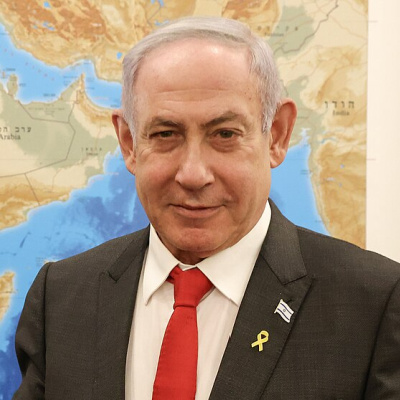
Israeli Prime Minister Benjamin Netanyahu had a long sit-down interview on “60 Minutes,” and I do mean LONG.
The aired version of the interview, which was conducted by Major Garrett, lasts about 14 and a half minutes.
The complete interview runs for more than an hour beyond that, clocking in at an hour and 18-plus minutes. For those of you with the time, it can be seen here. And this is where “60 Minutes” really does a disservice to Netanyahu. This interview was wide-ranging and deeply interesting, and deserved more than a tidy little quarter hour package. Netanyahu is a consequential world leader, and hearing his perspective on things, especially considering the status of events in the Middle East, is a big deal. The other problem with the interview is that Major Garrett is just terrible. He keeps talking over Netanyahu and jumping in to ask another question, even when the prime minister is answering his questions. This can be seen in the extended interview and read in the transcript. Garrett could not shut up while getting an answer. This was not a phone conversation or a press conference, this was an interview. You are supposed to ask a question, keep quiet while the interviewee is talking, take notes, THEN ask your follow up question.
And what Netanyahu was giving out were some real, concrete answers about the reality of war, the reality of what has to happen in Iran, and the reality of why all of this matters to the United States. First off, the reality is that Israel’s perspective on Iran was permanently changed on October 7, 2023. We know Iran backed Hamas, but they had also planned for Hezbollah to jump into the war and make Israel fight on two fronts. Fortunately, Israel was able to mount a defense to keep that from happening, along with evacuating whole cities in the north to keep them from being massacred and more hostages being taken. Hezbollah has been decimated by Operation Grim Beeper and the lack of help from Iran, but that part of the fight is not over.
PRIME MINISTER BENJAMIN NETANYAHU: Hezbollah had 150,000 ballistic missiles and rockets before the war. 150,000. That’s the densest concentration of these projectiles on the planet, and they were all aimed to destroy our cities. Not only to harass the north of the country–
MAJOR GARRETT: Right.
PRIME MINISTER BENJAMIN NETANYAHU: –with rockets, but to destroy our cities– Tel Aviv, Jerusalem, Haifa, you name it, with ballistic missiles that come raining down. You know, each one has half a ton or a ton of– explosives, and they come down, it’s like a bus coming down with amazing speed, and the destruction is terrible.
We destroyed the bulk of that. We destroyed about 90– more than 90% of that. But that still leaves them with thousands of– of rockets and– and some ballistic missiles. And that’s still a big issue. They still hold Lebanon hostage. Leb– Hezbollah is basically a proxy of Iran. Iran holds Lebanon. We have no quarrel with Lebanon. We could make peace with Lebanon and want to make peace with them tomorrow, no, yesterday. But you have this foreign body, this– this– Ira– Iranian-backed terrorist organization that hijacked the country.
MAJOR GARRETT: Right. And the Lebanese government has a history of being in– incapacitated or unable.
PRIME MINISTER BENJAMIN NETANYAHU: Right.
MAJOR GARRETT: So when you’re negotiating with the Lebanese government, many people are confused, “How does that solve the Hezbollah problem?”
PRIME MINISTER BENJAMIN NETANYAHU: Well, it doesn’t. Not yet. So we’ve had to go into Lebanon to prevent a repeat of the invasion we had in Gaza. You know, October 7th, Hamas invaded us, butchered our– our men, beheaded– our men, raped our women and then killed them, burnt our babies, did the worst massacre against the Jewish people since the Holocaust.
And guess what? On the other border, Hezbollah from Lebanon was planning to do even more. They had 5,000– Radwan Force terrorists ready to invade the Galilee. So we pushed them back. We’ve got a security belt now that prevents ’em from doing that or shooting anti-tank missiles into our kitchens, into our living rooms. But it’s not over yet. We have– we still have– missiles. We have drones, killer drones. We have to deal with that. Now, if we are– let me tell you, the Lebanese would like us to do that. Many, you know? They talk–
MAJOR GARRETT: Eradicate Hezbollah?
PRIME MINISTER BENJAMIN NETANYAHU: Oh, yeah. Because they want freedom. Who’d want a country to be taken over by these killers and these murderers? Of course they want to be free. But they’ve not shown yet the capacity to fight them. What we’re talking to them about is, “How do we work together to militarily and politically, possibly splitting up the work, to get rid of Hezbollah?” It’s not yet been done. It has to be done as well.
Netanyahu goes on to point out that Iran has tried to claim that a ceasefire with them also extends to Hezbollah, something which the United States and Israel have agreed is not happening. October 7th forever altered the Israeli perspective on Iranian proxies.
UNREAL. In the wake of 60 Minutes trying to smear Bibi Netanyahu for having a “hunger” for “conflict,” the Israeli PM explains how the Hamas/Iran attack on October 7th changed him:
Netanyahu: “Before the October 7th, I was considered perhaps the most restrained Prime Minister in… pic.twitter.com/cn7S8t8YD1
— Steve Guest (@SteveGuest) May 11, 2026
Netanyahu: “Before the October 7th, I was considered perhaps the most restrained Prime Minister in Israel’s history. I was conceived as being politically tough, but militarily very restrained.
Obviously, it changed on October 7th because they were going to annihilate us. I didn’t think it was just an attack by Hamas. I saw it as it was, an attack by the Iran axis to try to annihilate us through a noose of death.
And I said on the second day of the war, I said, we’re going to change the Middle East. We’re going to change this condition where they’re ganging up on us, thinking they’re going to wipe out the one and only Jewish state, wipe out 3,500 years of Jewish history. It’s not going to happen. Not on my watch. And I said to the Israeli citizens, not on your watch.”
As far as Iran goes, Netanyahu made it clear that he agrees with President Trump: the war ends when Iran gives up its enriched uranium and nuclear ambitions.
MAJOR GARRETT: So this war– this war cannot end until all those things are eliminated?
PRIME MINISTER BENJAMIN NETANYAHU: Well, certainly we want to get the nuclear material out. We certainly want to get the enrichment sites– dismantled. We’ve curbed a lot. We’ve degraded a lot of the missile production sites. But the agreement should cover all these areas, including the proxies.
Can it end with, as President Trump has– has– led, now, a blockade, an economic pressure on them to do it with non-military means? Fine. If it can be accomplished, why not? But if not– both the United States and Israel, we both agree, President Trump and I, that if necessary, we can reengage them militarily, if it’s necessary.
Netanyahu also had this reminder for the American people – Iran hates you more than they hate Israel. They’ve proved it time and again by killing Americans in the past, and they intended on killing more Americans with a bomb in the future.
PRIME MINISTER BENJAMIN NETANYAHU: I think the most important thing for people to understand in America (and in Israel, I think they do understand it) but, for– in the world, in Europe, you have to understand. Iran, that declares not merely death to Israel but death to America, that’s what they want to achieve.
They don’t– not only want to kill Americans, which they have killed and wounded them by the thousands, burned up your embassies– killed your Marines, burned your flags, tried to assassinate– the president of the United States and your– and some of your chief– officials several times.
They’re committed to destroy America. They say that, okay? Their commitment involved their– plans over the years to build nuclear bombs and the means to deliver them to the United States. They were very close to developing a nuclear bomb, okay? Very close.
In fact, if we hadn’t done the two military operations that we did, they’d have a bomb within– now or within a month or two. Now, you don’t want a fanatic regime like that, that hates America, that is– has no compunction of murdering its own citizen– murdering and wounding tens of thousands of its own citizens, you don’t want them to have nuclear weapons. That’s what prompted President Trump — and me to go out and stop them, prevent them from having them.
MAJOR GARRETT: And I’m just tryin’ to get at, “How long is it going to take to achieve that aim?”
PRIME MINISTER BENJAMIN NETANYAHU: I’m not gonna give a timetable to it, but I’m gonna say that’s a terrifically important issue, because you don’t want Iran to have ballistic missiles to reach any city in the United States with nuclear warheads, because no American would be safe.
And it amazes me, frankly, you know, when you talk about it, you say– people ask, “What is the purpose of this war? What’s the point?”
The point is not to let a regime committed to the destruction of the United States and Israel– they call us the Little Satan. They call you the Big Satan. What do you do with the Big Satan? You have to remove it from the world. That’s their doctrine.
Major Garrett asked why full regime change hasn’t happened yet if Israel wants that to happen. (Is he trying to imply that Israel controls everything in the Middle East or something?) Netanyahu said nothing is guaranteed, especially when Iran decides to massacre their own civilians in the streets. How do you convince people to overthrow their government then?
MAJOR GARRETT: I wanna get to that point you just made in a second. If someone were to ask you, as I’m going to, Mr. Prime Minister, the capabilities of Israeli intelligence within Iran allowed you to pinpoint the location of supreme leader and others. That is a kind of granular intelligence that is borderline miraculous in the modern world. Why wasn’t it sufficient to also foment a revolution?
PRIME MINISTER BENJAMIN NETANYAHU: I think it could be a necessary condition, but I’m not sure that it’s a sufficient condition. But you’re quite right about our granular capability for surgical attacks. It’s funny– (OVERTALK)
MAJOR GARRETT: Why can’t they also set in motion a revolution that could topple the regime, your operatives–
PRIME MINISTER BENJAMIN NETANYAHU: Because– because you need many things. You not only need the– you know, to attack the leadership. There’s still a lot of people there. You know, one out of– a hundred Iranians is in the– secret police, you know? And (LAUGH) they’re– as they showed, they’re quite ready to just butcher the people.
So it’s not that simple, because it’s terror. It’s basically the application of terror. This is the preeminent terrorist regime in the world, okay? They send terrorism to every country but first to their own people. So they terrorize them. But we– you know, we have been accused of– indiscriminate attacks.
We’re the most discriminating military on the planet in history. You know, remember the beepers? We knocked out– we didn’t kill– 2,500 people, but we impaired them, knocked them out with surgical precision, no collateral damage, with the beepers, you know?
And that’s what we proceeded to do against their key scientists, against their key commanders, against their leaders. But– it’s a component. It doesn’t guarantee. It doesn’t guarantee the– success of a revolt. But it could– help it– happen.
But one of the more interesting things that Netanyahu said is that Israel needs to get off American foreign aid.
MAJOR GARRETT: On that point, looking forward, Mr. Prime Minister, do you believe it’s time for the state of Israel to reexamine and possibly reset its financial relationship to the United States? Meaning, what the United States provides to Israel on an annual basis.
PRIME MINISTER BENJAMIN NETANYAHU: Absolutely. And I’ve said this to President Trump. I’ve said it in– to our own people. Their jaws drop, but I said, “Look.”
MAJOR GARRETT: What do you mean? What are you saying?
PRIME MINISTER BENJAMIN NETANYAHU: What I’m saying is that I want to draw down to zero the American financial support, the financial component of the military cooperation that we have. Because we receive– we received $3.8 billion a year. Now, it’s true you spent trillions of dollars or hundreds of billions and billions of dollars in Afghanistan and so on.
And one of– one of your Senators said, “Hell, if we had an Israel instead of Afghanistan, you know– you know, over there, we wouldn’t have to spend a trillion dollars. We wouldn’t. It’d be a lot cheaper.” But I’m saying it’s gonna be a lot cheaper, because I want to draw down the American support for Israel to zero. We’ve come of age.
We have– a booming economy. After three years of war, you know, our currency’s the strongest it’s ever been in the last 50 years, maybe more. Our stock market is one of the leading stock markets in the world. It’s because we have this– this very high-tech juggernaut economy, one of the two– centers of cross-discipline– breaking, breaking technologies just changing the world.
And we have a lot of talent here, which we share with our American friends. And we’re gonna share it with our Arab friends too. And I– I think that it’s time that we weaned ourselves from the remaining– military support and go from aid to partnership.
Netanyahu proposes a draw-down over the next ten years, and while there are up sides, there are downstream effects as well.
This is the right thing to do for both sides at this point. I’ve advocated for the gradual end of this military aid for awhile, but it won’t come without potential costs:https://t.co/vlnl7AzLux https://t.co/g9LN37nBNV
— AG (@AGHamilton29) May 10, 2026
While it would be highly illuminating to see those who decry the financial aid given to Israel react to this news from Netanyahu (and it would finally test whether some are anti-Israel’s government or just plain anti-Semites), there are consequences. Like in planning a wedding, those who pay get a say. When the United States no longer has a say in Israel’s defense because we aren’t helping pay for it, what happens when Israel pursues a military conflict that isn’t in the United States’ best interests? It could happen. Giving up the power of the pursestrings is a choice. However, it is likely past time to do so. And while Netanyahu won’t be prime minister forever, the relationship between Israel and the United States has definitely grown on his watch and President Trump’s.
MAJOR GARRETT: The British Ambassador earlier this year said privately, it’s since come out, that Britain does not have a special relationship with the United States anymore. He said, “If there’s a special relationship, it’s between Israel and the United States.” From your vantage point, is that correct?
PRIME MINISTER BENJAMIN NETANYAHU: I don’t always find myself in agreement with British ambassadors, but– I’ll have to agree on this one.
While I’m glad that “60 Minutes” put out the full interview on YouTube, as well as the complete transcript, it’s a shame that most people won’t get more than a few soundbites, which trims out quite a lot of the context. This interview deserves a whole lot more attention than it will actually get, and I’ve barely scratched the surface here. Prime Minister Netanyahu did here what President Trump needs to do – give a direct and clear answer about why this war is happening, and when it will officially come to an end. This war is happening to prevent Iran from becoming a more powerful theocratic dictatorship bent on eliminating those who do not agree with them, and it ends when they give up all their enriched uranium and nuclear weapons programs.
Featured image: Prime Minister Benjamin Netanyahu via the UK Government on Wikimedia Commons, cropped, CC BY 2.0













Leave a Reply