

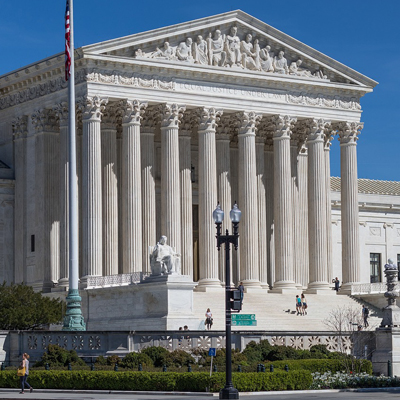
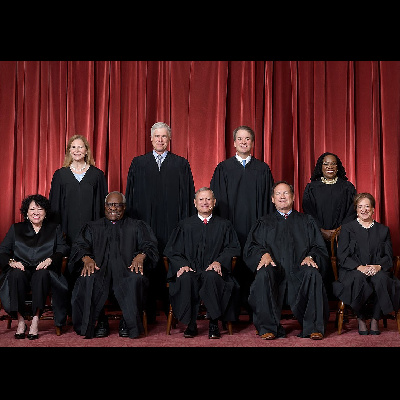
SCOTUS is set to hear Trump v. Barbara, but the case regarding who is entitled to birthright citizenship is going to be a difficult one to untangle.
On the surface, the case seems simple – SCOTUS simply has to decide if anyone, absolutely anyone, born on American soil, with very few and limited exceptions, is an automatic American citizen. The reality is that this accepted part of law has made it far too easy for parents to intentionally make their newborns into American citizens in order to gain a future benefit, and now SCOTUS will have to contend with the legal and emotional untangling or confirming of that current understanding of the law.
Donald Trump has been calling for an end to birthright citizenship since BEFORE his first presidential term. This issue has stayed with him, though he didn’t sign an executive order to end it until he was sworn in for his second term. His argument for ending birthright citizenship is contained in the executive order.
The Fourteenth Amendment states: “All persons born or naturalized in the United States, and subject to the jurisdiction thereof, are citizens of the United States and of the State wherein they reside.” That provision rightly repudiated the Supreme Court of the United States’s shameful decision in Dred Scott v. Sandford, 60 U.S. (19 How.) 393 (1857), which misinterpreted the Constitution as permanently excluding people of African descent from eligibility for United States citizenship solely based on their race.
But the Fourteenth Amendment has never been interpreted to extend citizenship universally to everyone born within the United States. The Fourteenth Amendment has always excluded from birthright citizenship persons who were born in the United States but not “subject to the jurisdiction thereof.” Consistent with this understanding, the Congress has further specified through legislation that “a person born in the United States, and subject to the jurisdiction thereof” is a national and citizen of the United States at birth, 8 U.S.C. 1401, generally mirroring the Fourteenth Amendment’s text.
Among the categories of individuals born in the United States and not subject to the jurisdiction thereof, the privilege of United States citizenship does not automatically extend to persons born in the United States: (1) when that person’s mother was unlawfully present in the United States and the father was not a United States citizen or lawful permanent resident at the time of said person’s birth, or (2) when that person’s mother’s presence in the United States at the time of said person’s birth was lawful but temporary (such as, but not limited to, visiting the United States under the auspices of the Visa Waiver Program or visiting on a student, work, or tourist visa) and the father was not a United States citizen or lawful permanent resident at the time of said person’s birth.
This is the same view that President Trump was echoing on Truth Social right before this case goes before SCOTUS.
Donald J. Trump Truth Social Post 06:47 AM EST 03.30.26 pic.twitter.com/fKbf655A2P
— Commentary Donald J. Trump Posts From Truth Social (@TrumpDailyPosts) March 30, 2026
That key phrase “subject to the jurisdiction thereof,” has been litigated previously, and a recent case involving “ISIS bride” Hoda Muthana confirmed that just because one is born in the United States, does not mean that one is automatically a citizen. In Muthana’s case, her father was a Yemeni diplomat, and the Obama State Department determined that she had no claim to American citizenship. That ruling was eventually upheld in federal court, and SCOTUS refused to take up her case in 2022.
But there are open questions about who constitutes a “lawful resident” and if birth mother or father’s residence is temporary or permanent. The proliferation of “anchor babies” born to illegal aliens has exposed that particular issue, but an even more glaring loophole exists – “birth tourism.”
What could be more useful for an enemy than to have agents with all the “privileges and immunities” of American citizens?
China has exploited the liberal interpretation of “birthright citizenship” to maximum advantage.
Analyzing the results from decades of “birth tourism” — which brings pregnant Chinese women or other foreign nationals to our soil, including territories like our Northern Mariana Islands, for the express purpose of giving birth and acquiring American citizenship for their offspring — Peter Schweizer, in his book “The Invisible Coup: How American Elites and Foreign Powers Use Immigration as a Weapon,” estimates “at least 750,000 and possibly as many as 1.5 million Chinese, who are also American citizens by virtue of being born here, are now growing toward adulthood in China.”
And birth tourism seems almost quaint compared to a new scheme that Chinese nationals have lately been perfecting: using surrogacy to turn foreign embryos into American citizens.
That’s what Guojun Xuan, and his partner Silvia Zhang, were doing with a breeding program that was exposed in Arcadia, California, last year.
Through a surrogacy firm that Xuan ran, the couple had more than two dozen of their own embryos brought to term by American women, not only in California but across the country in Pennsylvania, Virginia and Georgia as well.
The legal mess that these surrogacy programs has produced is monumental. After all, these babies were born in America, with American women bringing them to term as “rented wombs.” But biologically, these children belong to Chinese citizens, and the American surrogates have no legal rights to the children. And the “tourism” industry that sees pregnant Chinese women staying just long enough to get that birth certificate for future use is yet another problem.
SCOTUS may not be inclined to throw the proverbial baby out with the bathwater. But they are going to be tasked with either cutting the Gordian knot, or leaving it for a future court to deal with.
Decades after ratifying the 14th Amendment during Reconstruction, Congress in 1940 passed a law defining citizenship. It contained nearly identical language. Lawmakers recodified it in 1952, and it has been on the books ever since.
So even if Trump’s order aligns with the Constitution, the challengers argue it still runs afoul of that law.
It gives the justices a pathway to rule in the challengers’ favor without reaching the weighty question about the 14th Amendment. That could be an attractive option.
“If it is not necessary to decide more to dispose of a case, then it is necessary not to decide more,” Chief Justice John Roberts wrote as he famously did not join the majority opinion fully overturning the constitutional right to abortion in 2022.
He called it a “fundamental principle” of judicial restraint. The justices also have a separate principle to avoid interpreting ambiguous statutes in a way that makes them unconstitutional.
Despite the language being nearly identical to the 14th Amendment, the challengers contend the statute should be interpreted differently.
They argue that even if today’s Supreme Court interprets the amendment like Trump does, that wasn’t the prevailing understanding when Congress essentially copied the language to codify it into statute in 1940. And that understanding is what should control, the challengers argue.
“At that time—as the government all but concedes—Congress understood that the Clause’s ‘jurisdiction’ language incorporated the English common-law rule and exceptions, with the sole additional exception of Native American tribal members,” they wrote in court filings.
The Trump administration pushes back by pointing to Jim Crow laws.
In court filings, Solicitor General D. John Sauer told the justices to imagine a century-old statute guaranteeing “equal protection of the laws.” Lawmakers who passed it would’ve intended it to allow for separate-but-equal facilities. But courts today wouldn’t read it that way, Sauer noted. They’d interpret it to forbid segregation.
Sauer says the same logic should apply to the 1940 citizenship law.
“Because that statute echoes the Citizenship Clause’s language, it is best understood to codify the Clause’s objective meaning, not a late-arising misunderstanding of the Clause,” Sauer wrote in court filings.
And over a century ago, SCOTUS did indeed address legal residency when it came to birthright citizenship.
So far, every lower court that has looked at the executive order has deemed it illegal. The Supreme Court also dealt with a birthright citizenship question in the 1898 US v. Wong Kim Ark case, which revolved around the status of a man born to Chinese immigrants.
The high court ruled in that man’s favor and determined that almost all native born children automatically become citizens, with a few exceptions, such as foreign rulers, diplomats, and hostile foreign invaders.
“It is incorrect to say that the … Wong Kim Ark decision has settled this question, because Wong Kim Ark involved lawful domiciled parents, and the case before the Supreme Court today involved temporary visitors or unlawfully present aliens,” Ilan Wurman, Professor of Law at the University of Minnesota, said.
“The court has never actually addressed the meaning of the 14th Amendment as applied to the two categories of persons at issue in the Trump executive order,” he added, referring to the children of illegal immigrants and temporary visitors.
SCOTUS would obviously prefer that Congress go back and clarify the law, but that hasn’t happened.
At oral arguments last year at an earlier stage of the birthright citizenship case, which didn’t yet involve the legality of Trump’s policy, Justice Brett Kavanaugh lamented about a general diminished ability to get legislation passed.
Kavanaugh suggested it has led presidents from both parties to “push” with “good intentions” to stretch existing authority via executive action, rather than advocate for new legislation.
“I think that might be the why,” he said.
The current situation is untenable and messy, and obviously there needs to be clarification. On the surface, it seems obvious that Chinese birth tourists should not be able to obtain American citizenship for their newborns when they have no intention of staying in the country, or legal residency to do so. But that is not the current reading of the law. The intent of the Fourteenth Amendment was to protect the citizenship of the newly freed slaves, but that language has been stretched beyond intent if “birth tourism” is allowed to exist and produce American citizens as a result. I don’t envy the situation that SCOTUS is about to find themselves in, and it will be very revealing to see who has done their homework on the intent and the consequences, and who will be parroting slogans during oral arguments.
Featured image via MarkThomas on Pixabay, cropped, Pixabay license












1 Comment