



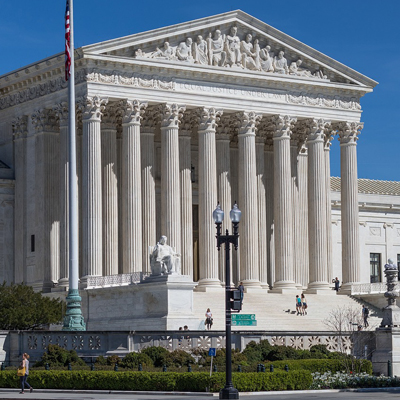
The Supreme Court’s ruling in Trump v. Barbara, determining that birthright citizenship is granted to anyone (with extraordinarily limited exceptions) who is born on American soil, does two things in the here and now.
First, it preserves the current status quo ante that was presumed, if not specifically codified. Immigration officials rejoice (because they will not have to sort out the mess) and lawyers boo (because they will not get paid to sort out the mess) at the news. Second, it lights a fire under those who want to stop the practice of “birth tourism” and “anchor babies” who are entitled to birthright citizenship. The question then becomes, how does this get changed, in both the short and the long term?
Better legal minds than mine, including Justices Alito and Thomas, along with multiple legal analysts, have already dissected this decision as a huge mistake with tremendous legal implications.
So what can be done in the short term to mitigate the impact? First of all, let’s note that if a Democrat becomes president again, every single decision or law proposed here will be immediately shot down, because the Democrat party of today, and the Democratic Socialists that they are willingly embracing (who will consume the party whole, eventually), are completely fine with open borders and unfettered immigration. This issue has now become a firm plank in the Republican party’s platform, and I expect that there will be serious questions to each future presidential candidate regarding birthright citizenship.
One of the immediate fixes that seems obvious?
BREAKING: Rep Andy Ogles just introduced the Anchors Away Act which bans certain pregnant women who are seeking to give birth here, from entering the U.S. pic.twitter.com/QbGZ7PBtD8
— Libs of TikTok (@libsoftiktok) June 30, 2026
The Trump administration is already moving to address this as well.
Colin McDonald, who leads the newly formed Fraud Division at the Department of Justice, informed employees on Tuesday that the DOJ will target those who “exploit our immigration system and violate criminal law,” according to a memorandum on “fraudulent birth tourism schemes” obtained by The Daily Wire.
“I am directing all United States Attorneys and the Criminal Division to work with the Department of Homeland Security to prioritize the investigation and prosecution of birth tourism schemes,” McDonald ordered.
The memo comes on the heels of a momentous Supreme Court decision that protects the practice of “birth tourism,” often used by wealthy Chinese nationals to travel to the United States to give birth to their children.
That won’t fix all of the problems, not at all, but it seems like an obvious start. The next proposal comes straight from the late Democrat Senator Harry Reid. Wouldn’t it be hilarious to see Democrats twitching and twisting to get themselves out of this one?
In 1993, the late Senator Harry Reid (D-NV) introduced a bill that would've eliminated birthright citizenship for the children of illegal aliens and clarified which babies would be entitled to US citizenship (US citizen or lawful permanent resident mothers).
The "Immigration… pic.twitter.com/z0cSlHpGq1
— Bill Melugin (@BillMelugin_) June 30, 2026
Could this pass the current Congress? Probably not, though Senator Bernie Moreno (R-OH) has said that he will re-introduce this bill into the Senate to see what happens.
Birthright citizenship is a gift to the enemies of America. Harry Reid knew it.
Senate Democrats will have a choice: side with Americans and their longtime leader, or side with foreign adversaries who will exploit this irresponsible ruling to harm our nation. pic.twitter.com/cE6ycfx2ac
— Bernie Moreno (@berniemoreno) June 30, 2026
But even a tightly written law is going to have issues, because the SCOTUS majority determined that birthright citizenship is Constitutionally guaranteed through the Fourteenth Amendment. Which means, as Professor Jonathan Turley says, a constitutional amendment is the only permanent way to fix the issue.
Today, Folarin Balogun secured a spot on the American soccer team for the World Cup…for a second time.
That may be the most positive spin I can offer to those upset by today’s 5-4 decision in favor of birthright citizenship. Balogun, one of the stars on our team, was born to Nigerian parents visiting the United States and then raised in England.
According to the Supreme Court, he is — and was always intended to be — a citizen under the Fourteenth Amendment.
It is a conclusion that divided the court 5-4, but, as in soccer, a one-point win is as good as a nine-point win.
The victory for birthright citizenship was due to the joining of Chief Justice John Roberts (who authored the decision) and Justice Amy Coney Barrett with the three liberal justices. They found the language and history of the amendment to be clear and, relying on prior rulings dating back decades, concluded that birth alone in this country is enough to confer citizenship — even if born to a tourist or someone briefly on our soil.
It is a view that is rejected by the vast majority of countries, which rightfully view birthright citizenship as bonkers, including some which followed the practice and then rescinded it. The United States remains one of the outliers in maintaining this ill-considered practice.
Justice Clarence Thomas wrote a dissent, joined by Justice Neil Gorsuch, effectively arguing that this is the invention of the Court, which refused to reconsider its lazy prior analysis. That included the Court’s 1898 ruling in United States v. Wong Kim Ark, which expanded birthright citizenship beyond what the Reconstruction Congress had ever “contemplated.” He noted that the Court could have resolved the case on narrower grounds consistent with the 14th Amendment: “Wong Kim Ark addressed only the citizenship of a child born to parents who were lawfully and permanently domiciled in the United States.”
On birthright citizenship, the matter now rests not with the court but the country. We have never truly had a national debate over the practice. The basis and future of birthright citizenship have remained matters almost exclusively for the courts.
We must now decide whether to pursue such a debate as a constitutional amendment.
While Congress can pass legislation cracking down on birth tourism, there is only so much that such laws can do in questioning why particular births occurred in the United States, such as the birth of Balogun.
I can think of no more appropriate debate to have as we celebrate our 250th anniversary than what it means to be a citizen of this unique republic.
Kurt Schlichter also points out that SCOTUS could reverse itself on birthright citizenship… eventually. Like the overturning of Roe v. Wade, this will have to be the long game.
What today shows is that we are closer to that than ever. We are on the verge of winning, and my assessment is that our victory is now inevitable.
Would I have loved Justice Barrett or Chief Justice Roberts to have defied their natural judicial conservatism—in the non-political sense—and embraced the new thinking today? Yeah, that would’ve been great, but it wasn’t in the cards. Instead, we got two votes that I frankly didn’t expect. And those two votes position us for victory. If one of those five majority justices goes away and President Donald Trump appoints the replacement, it’s very likely we will have a 6–3 majority that supports limiting the current idea of effectively unlimited birthright citizenship under the 14th Amendment.
Let me put it in sportsball terms. We didn’t score a touchdown today, but we moved the ball down the field and put ourselves in position for a field goal or maybe even a touchdown in the next couple of plays.
So don’t freak out, don’t cry, don’t scream and yell. There’s no reason to. This result was better than we had any right to expect at this juncture in the process of changing the way the 14th Amendment’s citizenship clause is viewed under the law. And this is why keeping the Senate in 2026 is more important than ever.
This single ruling by the Supreme Court is only the last word on birthright citizenship if we let it be so. I have a feeling it won’t be, but it’s going to require hard work to keep the Senate and the White House.
Featured image via MarkThomas on Pixabay, cropped, Pixabay license




 Scott says:
 Roberts is a worthless squish, and ACB is a serious disappointment… for a supposed originalist, shes seemed almost as clueless as KJB on some of these things..




Democrats Are Distancing Themselves From AOC’s Political Aspirations
https://victorygirlsblog.com/democrats-are-distancing-themselves-from-aocs-political-aspirations/
Yes, AOC has aspirations for higher office. Whether that is taking Chuck Schumer’s seat in the Senate, or swinging for the White House is the question. There’s...
Continue…
Salon’s Amanda Marcotte’s Obsession With MAGA Needs An Intervention
https://victorygirlsblog.com/salon-amanda-marcotte-maga-obsession/
Salon’s Amanda Marcotte has once again wandered deep into MAGA America. And once again, she has returned with tales nobody who actually lives here recognizes. This time,...…
Clancy Juror Has His Lawyer Giving Interview To Defend Him
https://victorygirlsblog.com/clancy-juror-has-his-lawyer-giving-interview-to-defend-him/
The Lindsay Clancy murder trial may be waiting for a hearing tomorrow, but the juror who refused to go along with the insanity defense now has a...
Continue reading
The post Clancy…
The Feminist Revolution and That Pesky Fine Print
https://victorygirlsblog.com/feminist-revolution-pesky-fine-print/
Feminism was supposed to make women stronger, happier and freer. But after several generations of liberation, maybe we’re finally old enough to ask an impolite question: did...
Continue reading







1 Comment